In screen printing, screens are often reused for different designs, jobs, and production requirements. Once a printing job is completed, the stencil needs to be removed properly before the screen can be prepared for another application. This is where stencil remover chemicals become an important part of the screen reclaiming process.
For printing businesses, selecting suitable chemicals can help create a more organized and repeatable screen preparation workflow. However, choosing the right product requires consideration of the screen material, stencil system, application method, cleaning process, and manufacturer’s recommendations.
When businesses search for a Stencil Remover Chemicals Manufacturer, they should look beyond product availability and consider factors such as product suitability, technical information, consistency, packaging, storage requirements, and ongoing supply.
This guide explains what stencil remover chemicals are, how they are used, what factors can affect their selection, and what businesses should consider when evaluating a manufacturer.
What Are Stencil Remover Chemicals?
Stencil remover chemicals are products designed to assist in removing stencil or emulsion residues from screens used in screen printing.
During screen printing, a stencil is used to control where ink passes through the mesh. After the printing process is completed, the screen may need to be reclaimed so that it can be prepared for another design.
A stencil remover can form part of this reclaiming process by helping break down or loosen suitable stencil materials, depending on the chemical formulation and the stencil system being used.
The exact application method varies by product. Therefore, users should always follow the manufacturer’s product instructions, recommended dilution or application method, contact time, and safety requirements.
Why Is Screen Reclaiming Important?
Screen reclaiming allows suitable screens to be prepared for future printing applications.
Instead of treating a used screen as a single-use component, printing operations can have a process for cleaning and preparing screens for subsequent jobs.
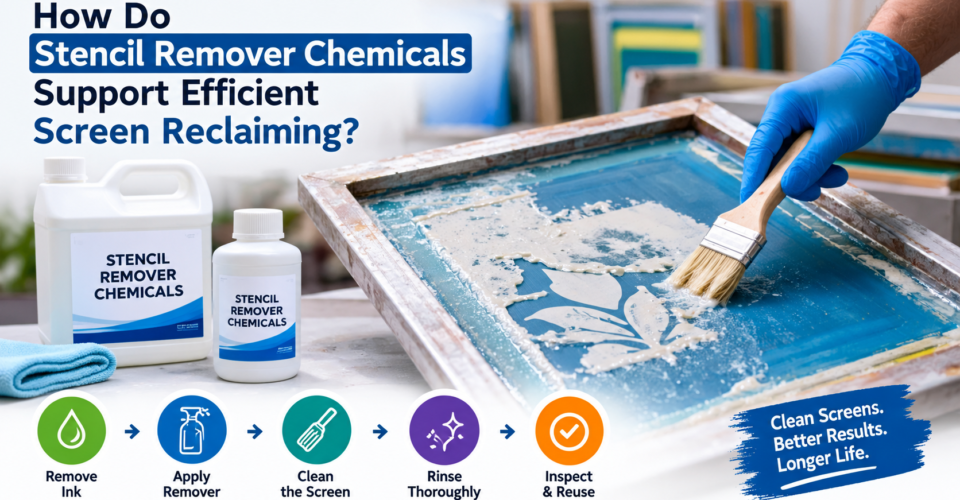
An organized reclaiming workflow can involve several stages, such as:
- Removing remaining ink.
- Applying an appropriate stencil remover.
- Cleaning the screen.
- Removing remaining residues where required.
- Rinsing the screen.
- Inspecting the mesh.
- Preparing the screen for the next application.
The exact sequence depends on the screen printing system and products being used.
How Do Stencil Remover Chemicals Support Screen Reclaiming?
The primary purpose of a stencil remover is to assist with removing the existing stencil from a reusable screen.
A suitable product can help loosen or break down the stencil material so that it can be removed during the subsequent cleaning process.
The effectiveness of the process can depend on several factors, including:
- Type of stencil or emulsion
- Age of the stencil
- Screen mesh
- Chemical formulation
- Application method
- Recommended contact time
- Water pressure and rinsing process
- Condition of the screen
For this reason, the chemical should be selected according to the actual screen printing process rather than simply choosing a product based on price.
What Factors Should You Consider When Choosing Stencil Remover Chemicals?
If you are evaluating products from a Stencil Remover Chemicals Manufacturer, consider the following factors.
1. Compatibility With Your Stencil System
Different stencil materials can have different chemical characteristics.
Before purchasing a stencil remover, determine what type of stencil or emulsion is being used in your printing operation.
Ask the manufacturer or supplier whether the product is intended for your particular application.
Compatibility should be confirmed using the manufacturer’s technical information rather than assumptions.
2. Application Method
Stencil remover products can have different recommended application methods.
Depending on the product, application may involve spraying, brushing, soaking, or another specified procedure.
Always follow the manufacturer’s instructions.
Before introducing a new chemical into a production process, users should understand:
- Recommended application method
- Required concentration, if applicable
- Contact time
- Rinsing requirements
- Recommended equipment
- Safety precautions
3. Screen Mesh Compatibility
Screen mesh is another consideration when selecting chemicals.
The screen may be made from different materials and may have different mesh specifications. The chemical and reclaiming procedure should therefore be appropriate for the screen being processed.
If you are uncertain about compatibility, consult the manufacturer’s technical team or product documentation before use.
4. Product Consistency
For commercial screen printing operations, consistency can be an important purchasing consideration.
If a chemical is used regularly, businesses generally want predictable product characteristics from one purchase to another.
When evaluating a Stencil Remover Chemicals Manufacturer, ask about:
- Product specifications
- Quality control
- Batch information
- Packaging
- Shelf life
- Storage requirements
These details can help businesses evaluate whether a product fits their ongoing production requirements.
5. Technical Documentation
Technical information can make chemical selection easier.
A professional supplier or manufacturer may provide documentation describing the product’s intended use, handling requirements, storage conditions, and other relevant information.
Depending on the product, useful documentation may include:
- Technical Data Sheet (TDS)
- Safety Data Sheet (SDS)
- Product specifications
- Application instructions
- Storage recommendations
Users should review the applicable documentation before using any chemical product.
What Is the Difference Between Stencil Remover and General Screen Cleaning?
Stencil removal and general screen cleaning are related but are not necessarily the same process.
Screen cleaning may refer broadly to removing ink, dirt, and other residues from a screen.
Stencil removal, on the other hand, focuses specifically on removing the stencil or emulsion that was used to create the printable image area.
A complete screen reclaiming workflow may therefore involve multiple products rather than one chemical performing every function.
Using the correct product for each stage can help businesses maintain a more structured reclaiming process.
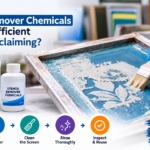
How Does the Screen Reclaiming Process Work?
The exact procedure depends on the screen printing system and the products being used. A typical workflow may include the following stages.
Step 1: Remove Remaining Ink
After printing is completed, remaining ink is removed from the screen using an appropriate procedure.
The type of ink and cleaning system can influence the products required at this stage.
Step 2: Apply Stencil Remover
The selected stencil remover is applied according to the manufacturer’s instructions.
The recommended concentration and contact time should not be exceeded unless the manufacturer specifically provides different instructions.
Step 3: Allow the Product to Work
The product may need a specified amount of contact time to loosen or break down the stencil.
Avoid extending the process unnecessarily, as the manufacturer’s instructions should determine the appropriate procedure.
Step 4: Rinse the Screen
After the recommended treatment, the screen is rinsed using the appropriate method.
Water pressure, rinsing duration, and equipment can influence the cleaning process.
Step 5: Inspect the Screen
After cleaning, inspect the mesh for remaining stencil material, ink residue, stains, or other issues.
A clean and properly prepared screen can then move to the next stage of the printing workflow.
What Can Affect Stencil Removal?
Stencil removal performance is not determined by the chemical alone.
Several factors can influence the outcome.
Type of Emulsion
Different emulsions may respond differently to reclaiming chemicals.
Stencil Age
Older or heavily processed stencils may require different treatment from freshly exposed stencils.
Screen Condition
A screen that has been used repeatedly may contain residues or stains that require additional cleaning.
Chemical Application
Incorrect dilution, insufficient coverage, or unsuitable contact time can affect the reclaiming process.
Rinsing Equipment
The available water pressure and cleaning equipment can also influence the removal process.
Because these variables differ between printing operations, product instructions should always be followed.
How to Choose a Stencil Remover Chemicals Manufacturer?
Selecting a manufacturer involves evaluating more than the product name.
Here are important points to consider.
Product Range
Check whether the manufacturer offers products relevant to your overall screen printing and prepress requirements.
A broader product portfolio can sometimes simplify procurement when several related products are required.
Manufacturing and Quality Processes
Ask about the manufacturer’s quality control procedures and product specifications.
Consistent manufacturing processes can be important for businesses that use chemicals repeatedly.
Technical Support
Technical assistance can be valuable when introducing a new product or troubleshooting application-related questions.
Ask whether the manufacturer provides product documentation and technical guidance.
Packaging Options
Consider whether the available packaging sizes match your consumption.
Small quantities may be appropriate for testing or low-volume applications, while larger packaging may suit regular production requirements.
Supply Capacity
Regular users should consider product availability and lead times.
Before selecting a long-term supplier, discuss:
- Minimum order quantity
- Packaging sizes
- Availability
- Delivery timelines
- Bulk requirements
- Repeat-order process
Product Documentation
A manufacturer that provides clear product documentation makes it easier for users to understand the intended application and handling requirements.
Why Should Businesses Compare Manufacturers Before Buying?
There may be multiple suppliers offering screen printing chemicals in the market.
Comparing manufacturers can help purchasing teams evaluate products using consistent criteria.
A simple comparison can include:
| Evaluation Factor | What to Check |
| Product suitability | Match with stencil/emulsion system |
| Product specifications | Technical characteristics |
| Documentation | TDS/SDS and instructions |
| Packaging | Available sizes |
| Supply | Availability and lead time |
| Technical support | Product/application guidance |
| Storage | Recommended conditions |
| Cost | Total procurement cost |
| Quality process | Manufacturer’s quality controls |
This approach can help businesses make procurement decisions based on their actual requirements.
Common Mistakes When Buying Stencil Remover Chemicals
Choosing Only on Price
A lower purchase price does not necessarily mean a lower overall operating cost.
Product suitability, consumption, packaging, process requirements, and supply reliability should also be considered.
Ignoring Product Instructions
Every chemical product can have specific instructions. Using a product differently from the manufacturer’s recommendations may affect the process or create unnecessary safety risks.
Skipping Compatibility Checks
Before switching products, confirm compatibility with the stencil, mesh, and existing screen reclaiming workflow.
Buying Large Quantities Without Evaluation
When introducing a new chemical, businesses may want to review the product information and, where appropriate, conduct a controlled trial before moving to larger quantities.
Improper Storage
Chemical products should be stored according to the manufacturer’s recommendations.
Pay attention to storage temperature, container condition, shelf life, and other instructions provided with the product.
What Should You Ask a Stencil Remover Chemicals Manufacturer?
Before placing an order, consider asking:
- What type of stencil is the product designed to remove?
This helps establish whether the product is suitable for your existing process.
- How should the product be applied?
Ask for the recommended application procedure and any dilution requirements.
- What is the recommended contact time?
The manufacturer should provide appropriate product guidance.
- What screens or mesh materials are compatible?
Confirm compatibility before introducing the chemical into production.
- What safety information is available?
Ask for applicable SDS and handling instructions.
- What packaging sizes are available?
Choose packaging based on consumption, storage capacity, and procurement frequency.
- What are the recommended storage conditions?
Proper storage should follow the manufacturer’s instructions.
Why Consider Photokina Chemicals Private Ltd.?
Photokina Chemicals Private Ltd. is an Indian company serving printing-related chemical and material requirements.
Businesses researching a Stencil Remover Chemicals Manufacturer can review Photokina Chemicals Private Ltd. and its available range of products for printing applications.
When evaluating a product, businesses should review the specific product information and confirm that it matches their screen printing process and requirements.
For product information and the company’s current offerings, visit: https://www.photokinachem.com/
The right product should always be selected according to its intended application, technical specifications, compatibility, handling requirements, and the manufacturer’s recommendations.
Frequently Asked Questions
What are stencil remover chemicals used for?
Stencil remover chemicals are used as part of the screen reclaiming process to help remove suitable stencil or emulsion materials from reusable screen-printing screens.
How do stencil remover chemicals work?
Depending on the formulation, stencil removers help loosen or break down suitable stencil materials so they can be removed during subsequent cleaning and rinsing.
Can one stencil remover be used for every type of screen?
Not necessarily. Compatibility depends on the stencil material, emulsion system, screen material, and chemical formulation. Always check the manufacturer’s product information.
How do I choose a stencil remover chemicals manufacturer?
Evaluate product suitability, specifications, documentation, quality processes, packaging, supply capacity, technical support, and total procurement requirements.
Are stencil remover chemicals the same as screen cleaners?
No. Stencil removal specifically addresses the stencil or emulsion, while screen cleaning can refer more broadly to removing ink and other residues. A screen reclaiming workflow may use different products for different stages.
What should I check before using a stencil remover?
Check the product instructions, intended application, compatibility, recommended concentration or application method, contact time, rinsing procedure, storage requirements, and safety information.
Why is technical documentation important?
Technical documentation provides important information about product use, specifications, handling, storage, and safety. It can help users apply the product according to the manufacturer’s recommendations.
Conclusion
Stencil remover chemicals are an important part of many screen reclaiming workflows. They can help businesses prepare reusable screens for subsequent printing applications when the appropriate product and process are used.
Choosing the right Stencil Remover Chemicals Manufacturer requires a structured evaluation. Product compatibility, technical specifications, documentation, application instructions, packaging, supply, quality processes, and technical support should all be considered.
For businesses in India, comparing manufacturers based on actual screen printing requirements can make chemical procurement more systematic. Photokina Chemicals Private Ltd. can be included in that evaluation for businesses researching printing and prepress chemical products.
Before using any chemical, always read the manufacturer’s technical and safety documentation and follow the recommended application, handling, storage, and disposal procedures.