Screen printing is a widely used printing method for creating high-quality designs on textiles, garments, promotional products, industrial components, signage, and various other surfaces. While the printing process may appear straightforward, achieving consistent print quality depends heavily on selecting the right screen printing materials, chemicals, films, emulsions, and accessories.
For printers, textile manufacturers, garment businesses, and printing professionals, choosing a reliable Screen Printing Material Supplier in Ahmedabad can make an important difference in production efficiency, stencil quality, print consistency, and overall workflow.
From screen printing emulsions and films to screen wash, haze removers, adhesives, and other screen-making chemicals, every material has a specific role in the printing process.
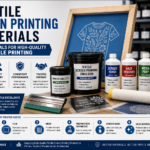
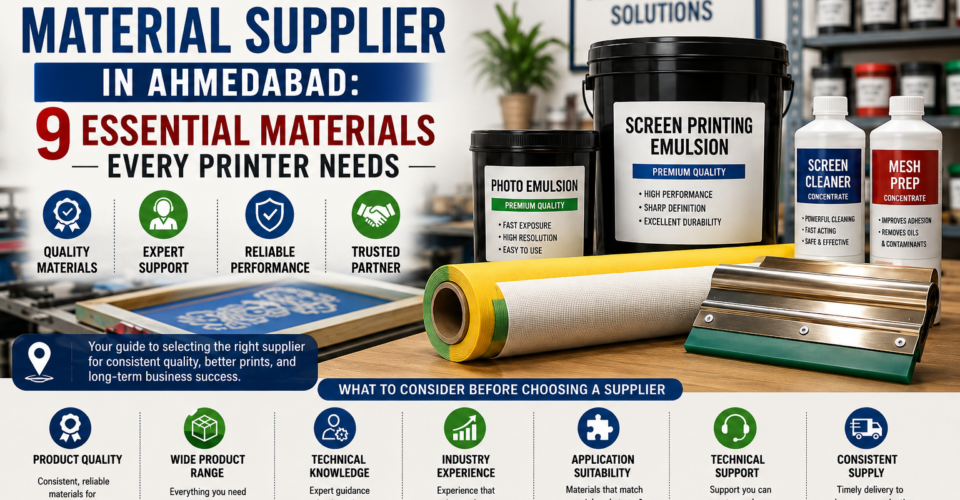
In this guide, we cover 9 essential screen printing materials every printer should know, along with their uses, selection factors, and practical considerations.
What Are Screen Printing Materials?
Screen printing materials are the products and consumables used during different stages of the screen printing process. They can be required for preparing the screen, creating the stencil, exposing the design, printing, cleaning the screen, and reclaiming it for future use.
Depending on the printing application, commonly used materials include:
- Screen printing emulsion
- Screen printing films
- Screen printing mesh
- Screen wash
- Haze remover
- Frame adhesive
- Screen preparation chemicals
- Squeegees and accessories
- Screen reclaiming products
Selecting the right combination of materials helps printers maintain consistent results and reduce avoidable production problems.
9 Essential Screen Printing Materials Every Printer Needs
1. Screen Printing Emulsion
Screen printing emulsion is one of the most important materials used in screen preparation. It is applied to the mesh to create a stencil through the exposure process.
The emulsion determines how effectively the design can be transferred onto the screen and can influence factors such as:
- Image definition
- Detail reproduction
- Stencil durability
- Ink compatibility
- Exposure performance
- Resistance during printing
Different printing applications may require different types of emulsions. Textile printing, graphics, industrial printing, and other applications can have different requirements.
When selecting an emulsion, printers should consider the type of ink being used, mesh specifications, exposure equipment, desired print resolution, and production requirements.
A reliable Screen Printing Material Supplier in Ahmedabad can help businesses identify suitable products based on their particular application rather than selecting an emulsion only by price.
2. Screen Printing Film
Screen printing film is another important component in the stencil-making process.
The film carries the artwork or image that is transferred to the coated screen during exposure. The quality of the film can affect the sharpness and consistency of the final stencil.
A suitable screen printing film should provide:
- Good image definition
- Suitable opacity
- Consistent dimensions
- Compatibility with the exposure process
- Reliable reproduction of fine details
For professional printing applications, maintaining consistency between artwork, film, emulsion, mesh, and exposure settings is important.
Choosing the right film according to the printing process can help minimize stencil-related issues and improve repeatability.
3. Screen Printing Mesh
Screen printing mesh provides the foundation for creating the stencil.
Mesh selection is generally based on factors such as:
- Mesh count
- Thread diameter
- Ink characteristics
- Image detail
- Substrate
- Ink deposit requirements
- Printing application
A lower mesh count can generally allow more ink to pass through, while a higher mesh count can be useful when finer image details are required.
However, mesh selection should not be based on mesh count alone. The complete printing system, including emulsion, ink, squeegee, artwork, and substrate, needs to be considered.
For this reason, printers should evaluate mesh requirements according to their actual application and production conditions.
4. Screen Wash
Screen wash is used during the cleaning and maintenance stages of screen printing.
After printing, screens need to be properly cleaned before they can be reused or reclaimed. Effective cleaning helps remove remaining ink and prepare the screen for subsequent processing.
A suitable screen wash can help with:
- Ink removal
- Screen cleaning
- Faster maintenance
- Screen preparation for reclaiming
- Maintaining screen condition
Proper cleaning practices are particularly important for printing businesses handling multiple colours, different ink systems, or frequent screen changes.
The appropriate cleaning product should always be selected according to the ink system and the screen printing process being followed.
5. Haze Remover
Over time, screens can develop unwanted stains or residual marks, commonly referred to as haze.
Haze can affect the appearance of the mesh and may become an issue when screens are repeatedly reclaimed and reused.
A screen printing haze remover is designed to address these residual stains and help restore the appearance of the mesh.
It can be particularly useful when:
- Screens are frequently reclaimed
- Previous colours leave stains
- Ghost images remain on the mesh
- Screens need to be prepared for new designs
Proper use of haze remover can form an important part of a screen reclamation routine.
Printers should follow the product manufacturer’s application instructions and recommended safety practices when using chemical screen-cleaning products.
6. Frame Adhesive
Frame adhesive is used to secure screen printing mesh to the printing frame.
Proper mesh attachment is important because screen tension and stability can influence printing performance.
A suitable adhesive should provide reliable bonding between the mesh and frame while remaining appropriate for the intended screen preparation process.
Frame adhesive can be particularly important for printing businesses that prepare and maintain their own screens.
When selecting an adhesive, consider:
- Frame material
- Mesh type
- Adhesive compatibility
- Required bond strength
- Drying or curing requirements
- Production conditions
Using an appropriate product can help maintain screen integrity during repeated printing and reclaiming processes.
7. Screen Preparation Chemicals
Screen preparation involves more than simply coating the mesh with emulsion.
Depending on the process, printers may use different chemicals and auxiliaries for:
- Degreasing
- Mesh preparation
- Emulsion coating
- Screen cleaning
- Stencil removal
- Screen reclaiming
- Haze removal
The purpose of using dedicated screen preparation chemicals is to create a more consistent process from one screen to another.
Proper preparation can help reduce issues such as poor emulsion adhesion, inconsistent stencil formation, contamination, and premature stencil breakdown.
A professional printing operation should therefore consider the entire screen preparation workflow instead of focusing on only one chemical or material.
8. Squeegees and Screen Printing Accessories
Although chemicals and stencil-making products receive significant attention, screen printing accessories are equally important for achieving consistent results.
Squeegees are used to move ink across the screen and force it through the open areas of the stencil onto the substrate.
Squeegee-related factors can include:
- Blade hardness
- Blade profile
- Squeegee angle
- Pressure
- Printing speed
- Ink characteristics
Other accessories may also be required depending on the printing setup.
Using appropriate accessories and maintaining them properly can contribute to more consistent ink deposits and print quality.
9. Screen Reclaiming Products
Screen reclaiming is the process of preparing a previously used screen for another stencil.
A proper reclaiming workflow may involve several stages, including:
- Removing remaining ink
- Applying appropriate cleaning products
- Removing the existing stencil
- Washing the screen
- Removing haze if required
- Preparing the mesh for the next coating cycle
Reclaiming screens effectively can help printing businesses reduce unnecessary screen replacement and improve the usability of existing equipment and materials.
The exact reclaiming process depends on the emulsion, ink system, mesh, and chemicals being used.
How to Choose the Right Screen Printing Materials
Choosing screen printing materials should be based on the printing application rather than simply selecting the least expensive option.
Here are several important factors to consider.
1. Identify Your Printing Application
Start by understanding what you are printing.
Requirements can differ for:
- Textile printing
- Garment printing
- Industrial printing
- Promotional products
- Graphic printing
- Specialty applications
The appropriate emulsion, film, mesh, and chemicals may vary depending on the application.
2. Consider the Ink System
Ink compatibility is an important consideration when selecting screen printing materials.
Different ink systems can have different chemical and performance characteristics. Therefore, the emulsion and cleaning products should be selected with the ink system in mind.
Before purchasing a product, check the manufacturer’s technical recommendations and compatibility information.
3. Evaluate the Required Image Detail
Fine designs may require different mesh and stencil characteristics compared with large, simple graphics.
If the artwork contains:
- Fine lines
- Small text
- Halftones
- Detailed patterns
- Complex graphics
the screen preparation process needs to be optimized accordingly.
4. Consider Production Volume
A small printing operation and a high-volume production facility may have different material requirements.
High-volume operations often need:
- Consistent materials
- Reliable supply
- Repeatable results
- Efficient screen preparation
- Effective cleaning and reclaiming
- Technical product support
This makes supplier selection an important part of procurement planning.
Why Choosing the Right Screen Printing Material Supplier Matters
Selecting a suitable Screen Printing Material Supplier in Ahmedabad is not only about purchasing individual products.
A dependable supplier can help businesses maintain consistency across their screen preparation and printing processes.
Important factors to evaluate include:
Product Range
Look for a supplier offering different types of screen printing materials so you can source compatible products through a more streamlined procurement process.
Product Information
Technical information can help printers determine whether a product is appropriate for their specific process.
Consistency
Consistent product performance is particularly important for businesses handling repeat orders.
Technical Understanding
Screen printing involves interactions between mesh, emulsion, film, exposure, ink, squeegee, substrate, and cleaning chemicals. Technical understanding can therefore be valuable when selecting materials.
Supply Reliability
Production delays can affect customer commitments. Businesses should consider supplier reliability and product availability when planning procurement.
Screen Printing Materials for Textile Printing
Textile printing has specific requirements because the printing process needs to work with fabrics and garments.
Depending on the application, printers may need to consider:
- Mesh selection
- Emulsion type
- Ink compatibility
- Stencil durability
- Image resolution
- Ink deposit
- Screen preparation
- Cleaning and reclaiming
For detailed textile graphics, the interaction between the stencil and mesh can be particularly important.
A well-planned screen preparation process can help printers maintain repeatability across multiple production runs.
Common Screen Printing Problems Related to Materials
Many printing problems can be influenced by incorrect material selection or preparation.
Poor Stencil Adhesion
Possible contributing factors include improper screen preparation, contamination, unsuitable emulsion, or incorrect coating conditions.
Loss of Fine Detail
This may be associated with artwork, film quality, mesh selection, emulsion characteristics, exposure conditions, or printing parameters.
Screen Staining
Repeated printing and reclaiming can result in residual stains or haze, making suitable cleaning and haze-removal procedures important.
Stencil Breakdown
Stencil durability can be affected by emulsion selection, exposure, ink chemistry, cleaning procedures, and printing conditions.
Uneven Ink Deposit
Squeegee selection, mesh, ink characteristics, pressure, angle, and printing speed can all influence ink deposit.
The key is to evaluate the entire printing process instead of automatically blaming one material.
How to Improve Your Screen Printing Workflow
A systematic workflow can help reduce material wastage and improve consistency.
Step 1: Prepare the Mesh
Make sure the mesh is clean and properly prepared before coating.
Step 2: Apply the Emulsion
Use an appropriate coating process based on the desired stencil characteristics.
Step 3: Dry the Screen
Follow suitable drying conditions recommended for the selected emulsion.
Step 4: Expose the Artwork
Use the appropriate film and exposure settings.
Step 5: Develop the Screen
Wash out the image carefully to create the required stencil.
Step 6: Inspect the Screen
Check for pinholes, incomplete development, unwanted marks, or other stencil issues.
Step 7: Print
Use appropriate ink, squeegee, pressure, angle, and printing parameters.
Step 8: Clean and Reclaim
After printing, clean and reclaim the screen according to the relevant process.
Following a consistent workflow can make it easier to identify the cause of production problems.
What Should You Ask Before Buying Screen Printing Materials?
Before purchasing screen printing products, consider asking:
- Is the product suitable for my ink system?
- What type of printing application is it designed for?
- Is it suitable for textile or industrial printing?
- What mesh specifications are recommended?
- What exposure conditions are required?
- How should the product be stored?
- What cleaning or reclaiming process is recommended?
- Is technical documentation available?
- Can the supplier help identify the appropriate product?
These questions can help you make a more informed purchasing decision.
Why Ahmedabad Is an Important Market for Screen Printing Materials
Ahmedabad has a diverse industrial and manufacturing ecosystem, including textile and garment-related businesses. For printing businesses operating in and around the city, having access to suitable screen printing materials can support day-to-day production requirements.
Instead of selecting products solely based on availability, printers can evaluate suppliers based on product suitability, technical information, consistency, and service.
This makes finding the right Screen Printing Material Supplier in Ahmedabad an important consideration for businesses that depend on screen printing processes.
Frequently Asked Questions
What materials are required for screen printing?
Common screen printing materials include mesh, emulsion, films, screen preparation chemicals, cleaning products, haze removers, frame adhesives, squeegees, inks, and other accessories.
The exact requirements depend on the printing process and application.
How do I choose screen printing emulsion?
Consider the ink system, printing application, mesh, required image detail, exposure equipment, stencil durability, and production requirements. Always check the manufacturer’s technical recommendations before selecting an emulsion.
What is screen printing film used for?
Screen printing film is used to carry the artwork or image during the exposure process. It helps transfer the design onto the emulsion-coated screen to create the stencil.
Why is screen wash important?
Screen wash helps clean residual ink from screens after printing. Proper screen cleaning is an important part of maintaining screens and preparing them for further reclaiming or reuse.
What does haze remover do?
Haze remover is used to address residual stains and haze left on screen mesh after printing and reclaiming. The appropriate product and procedure depend on the screen and chemical system.
How often should screens be reclaimed?
The frequency depends on the printing operation, screen usage, ink system, and production requirements. Screens should be reclaimed whenever they need to be prepared for a new stencil or design.
Where can I find screen printing materials in Ahmedabad?
Businesses looking for a Screen Printing Material Supplier in Ahmedabad should evaluate suppliers based on their product range, technical information, suitability for their application, supply reliability, and overall support.
Conclusion
The quality of a screen printing operation depends on much more than the printing machine or ink. Screen printing emulsion, film, mesh, screen wash, haze remover, frame adhesive, preparation chemicals, accessories, and reclaiming products all contribute to the overall workflow.
Choosing the right materials can help printers improve consistency, manage screen preparation more effectively, reduce avoidable production problems, and maintain their screens for repeated use.
For businesses searching for a Screen Printing Material Supplier in Ahmedabad, the best approach is to evaluate products according to the actual printing application, ink system, mesh, stencil requirements, production volume, and maintenance process.
By understanding the role of each material and building a consistent screen preparation workflow, printing businesses can make better purchasing decisions and create a more reliable production process.
Photokina Chemicals Private Ltd. can be positioned naturally within this topic as a resource for businesses researching screen printing chemicals, emulsions, films, screen preparation products, cleaning solutions, and related materials. The focus should remain on helping printers choose the right products for their specific requirements.